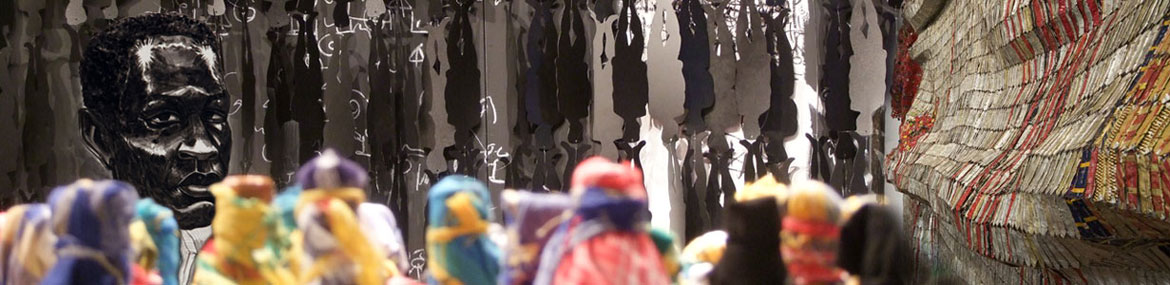
The exhibition functions as a window into a neglected area of Cuban art. It makes it possible to recognize interconnected artistic trajectories, lives, and aspirations that would otherwise appear as isolated and unique. Explorations of identity, memory, and the body emerge as ways of reclaiming imagined origins and participation in an existential and symbolic heritage fractured by forced diaspora.[v]
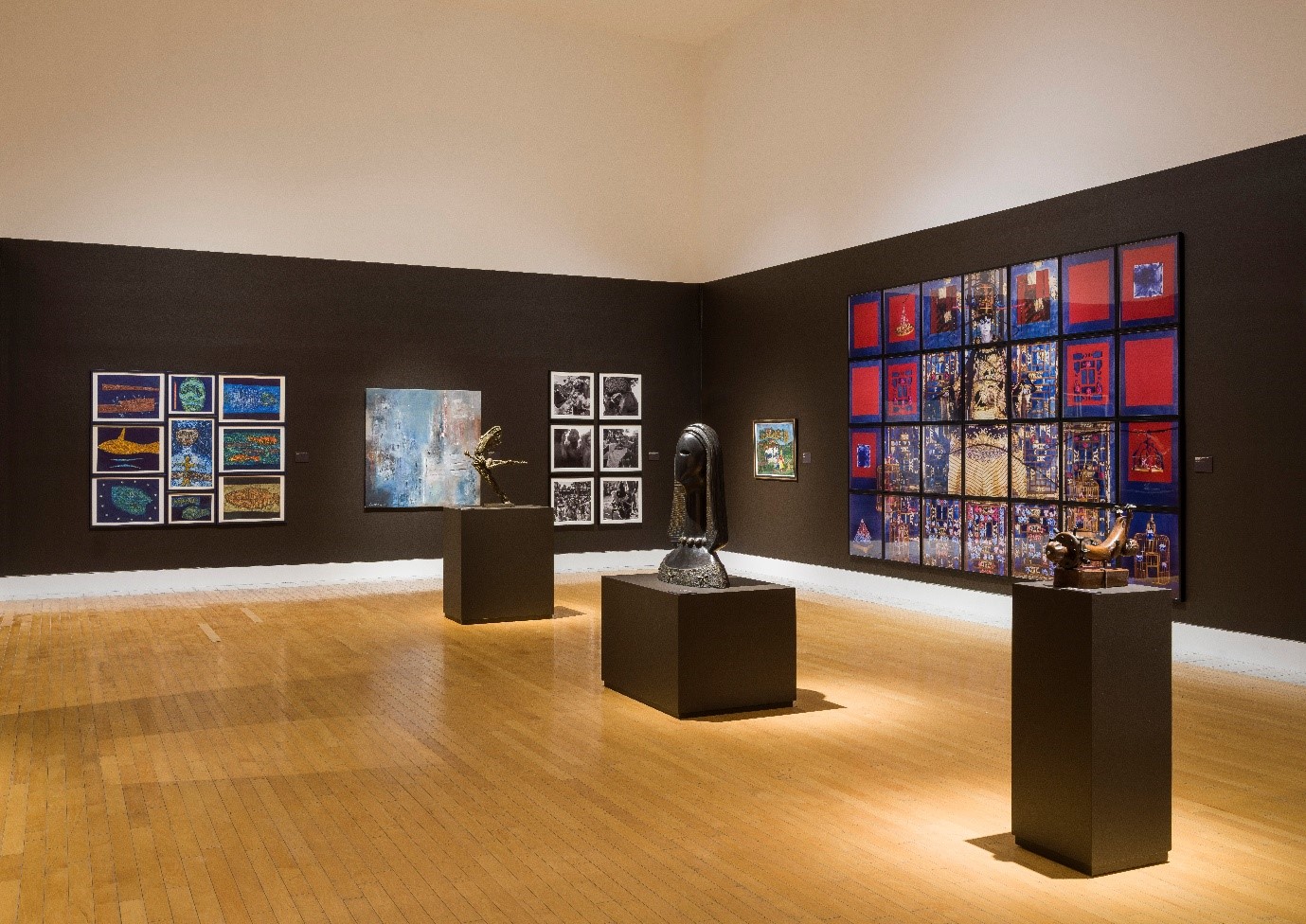
Exhibition view of My Own Past: Afrodescendant Contributions to Cuban Art, various artists. Lowe Art Museum. Photo Oriol Tarridas.
Counter-Visualities and Resistance in the Exhibition My Own Past: A Maroon Genealogy of Afrodescendant Cuban Art
From the galleries of the Lowe Art Museum in Miami, the exhibition My Own Past: Afrodescendant Contributions to Cuban Art, opened its doors in May to restore the cartography of Afrodescendant Cuban art—the aesthetic production of a population group that has been structurally subordinated and constituted as Cuba’s social “other.” Through art, Afrodescendant creators have become agents in constructing their own narratives and imaginaries, giving rise to narratives and strategies of resistance that this exhibition seeks to recover. The exhibition is a new, expanded iteration of a previous version shown at the Ethelbert Cooper Gallery of African & African American Art at Harvard University in 2022. Organized and curated by Alejandro de la Fuente, director of the Afro-Latin American Research Institute at Harvard, in collaboration with Bárbaro Martínez-Ruiz and Cary A. García Yero, the exhibition represents an ethical gesture of recovery and repair for historically marginalized practices.[i] It also calls attention to the systemic inequities that Cubans racialized as negros continue to endure amid the country’s ongoing social crisis.
The expressive depth and originality of the figurative languages developed by peripheral and counter-hegemonic subjects are revitalized through the collection of works now on view in Miami. Alongside nineteenth-century, avant-garde, and contemporary works of immense artistic and cultural value, the exhibition’s poetic movements allow visitors to appreciate, up close, the human and creative efforts of artists who succeeded in transgressing the logics of segregation and the racialization of labor through artistic practice.
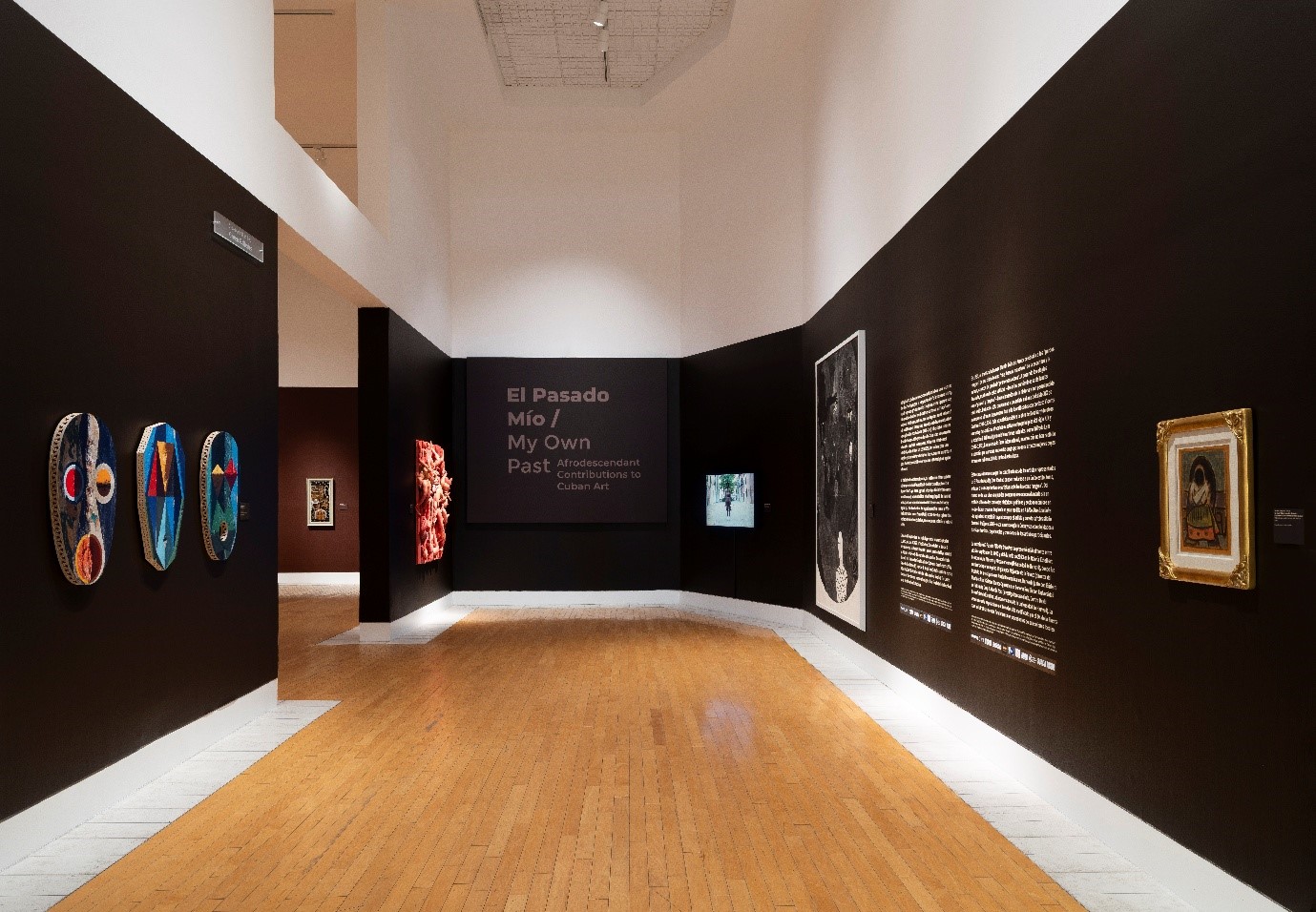
Exhibition view of My Own Past: Afrodescendant Contributions to Cuban Art, various artists. Lowe Art Museum. Photo Oriol Tarridas.
In the works that comprise My Own Past, every painterly tone and sculptural relief can be understood as a subversion of the “instrumentality of Black life and labor.”[ii] Technical mastery emerges as a triumph—a form of struggle against exclusion and subordination, the mechanism of colonial domination identified by Nelson Maldonado-Torres.[iii] Artistic practice by non-white bodies crystallized as a means of emancipating their intellectual, expressive, and physical capacities from the racial order that confined them to necessity and exploitation.[iv]
The exhibition offers a historical reconstruction of the aesthetic trajectories of those sectors in Cuba that were dispossessed of rights and agency. Its curatorial narrative unfolds through rigorous research that illuminates both social contexts and art-historical questions. As a multidisciplinary project, it creates an immersive experience that brings together not only artworks but also documents and historical archives. A whole section of the exhibition is devoted to documentary materials. It reconnects the fragments of a previously mutilated narrative, vindicating artistic practices that have long been marginalized and ignored.
The exhibition functions as a window into a neglected area of Cuban art. It makes it possible to recognize interconnected artistic trajectories, lives, and aspirations that would otherwise appear as isolated and unique. Explorations of identity, memory, and the body emerge as ways of reclaiming imagined origins and participation in an existential and symbolic heritage fractured by forced diaspora.[v]
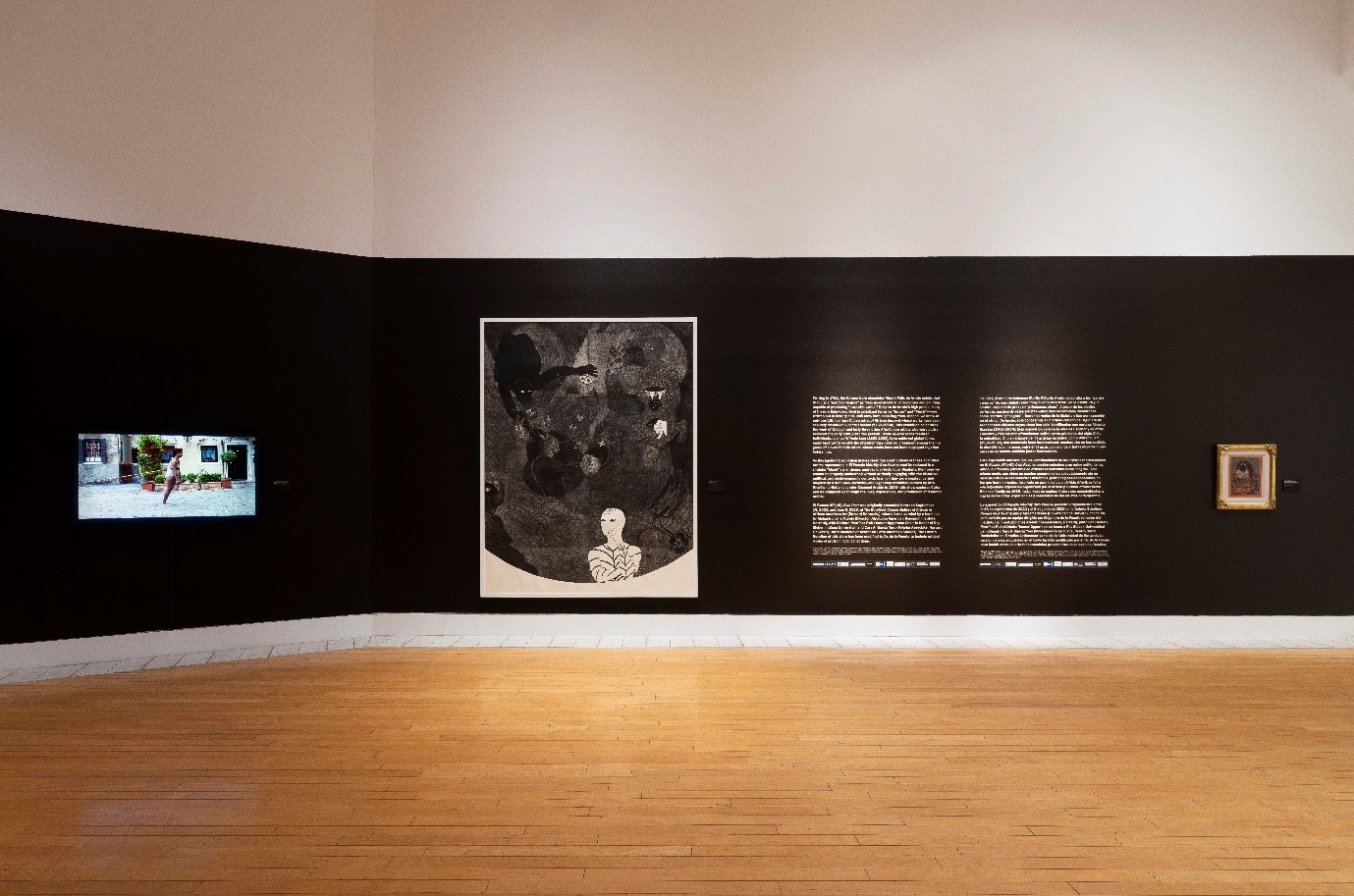
Exhibition view of My Own Past: Afrodescendant Contributions to Cuban Art, featuring works by Susana Pilar, Belkis, Ayón Manso and Wifredo Lam
The exhibition also invites viewers to admire, within these hybrid archipelagic figurations, a sensorium in which symbols rooted in African traditions intersect with artistic languages from across the Atlantic, including those of Europe. These narratives of reinvention transformed the fragments of a denied culture into a rich, densely layered sensibility. Art became a means of sustaining spiritual traditions, cultural practices, and foundational genealogies.
As visitors move through the exhibition, they encounter the role of art in recovering neglected temporalities and affective histories. Participation in an unnamed tradition gives rise to what might be called a maroon genealogy—the restoration of a lineage and artistic tradition that Black artists renew through their work. This amounts to reclaiming a visual inheritance, as exemplified by Elio Rodríguez’s revival and commentary on The Jungle by Wifredo Lam. It is a tribute to the iconic Afro-Caribbean artist, but Elio injects new textures and sensual dimensions into Lam’s work while reconfiguring its exuberant rhythms through a contemporary visual language.
The worlds and lives excluded from official artistic representations gradually take shape through this body of work, through this unique constellation of artists and their creations. These artists challenge asymmetries of power, oppression, and social inequality—themes that the exhibition forcefully brings to the foreground. The works in My Own Past emerge as counter-visualities: visual expressions of what has been previously excluded, critical sites that convey the tensions experienced by bodies and subjects marked as “other.”
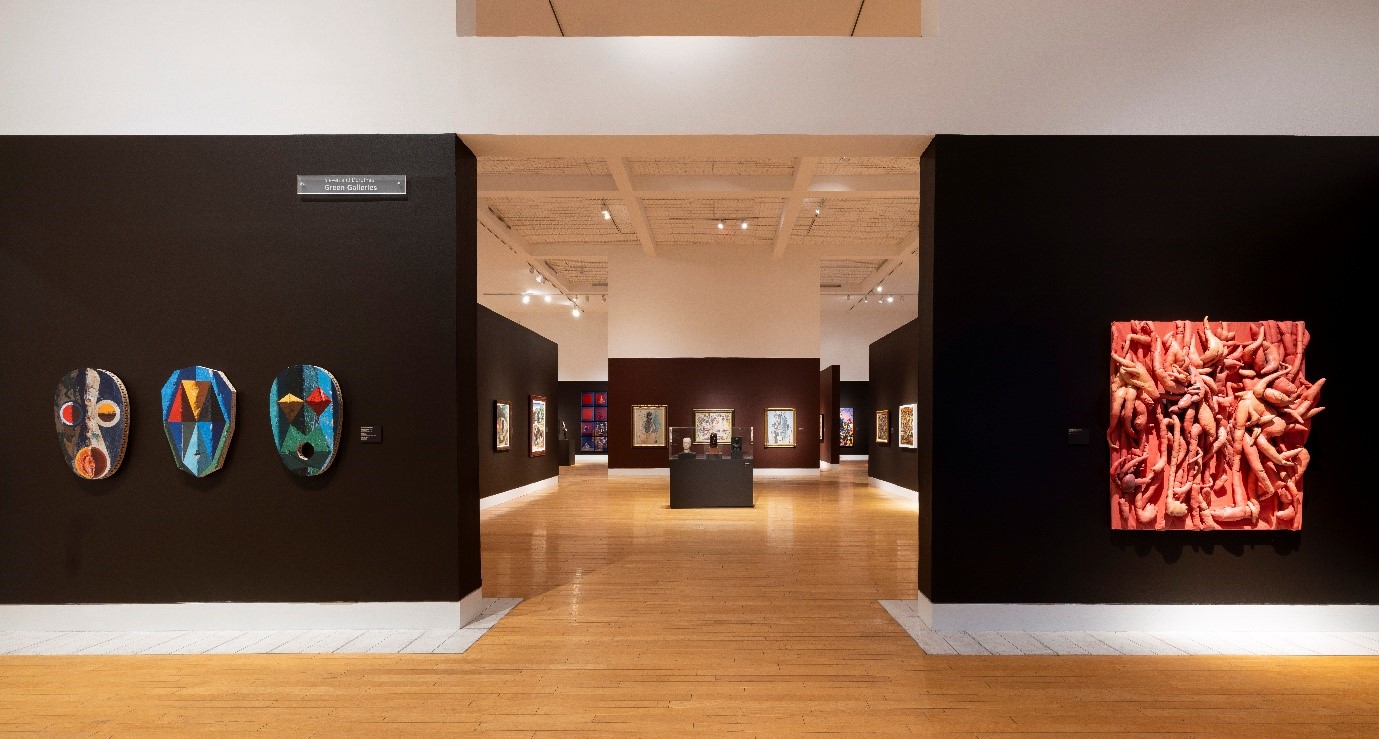
Exhibition view of My Own Past: Afrodescendant Contributions to Cuban Art, featuring works by Alexandre Arrechea and Elio Rodríguez in the foreground
Identifying and reconnecting the fragments of this once-silenced narrative is one of the exhibition’s greatest achievements. Through aesthetic practice, Afrodescendant Cuban artists have developed their own imaginaries, enacted political interventions, and contributed to the construction of collective identities. My Own Past gathers these artistic trajectories as acts of recognition, memory, and presence.
Afrocubanismo: Highlights from the Ramón and Nercys Cernuda Collection, an exhibition dedicated to exploring how the avant-garde movements of the 1930s and 1940s reimagined Cuba through Afro-Cuban culture, is presented in the adjacent galleries of the Lowe Art Museum. Unlike My Own Past, the artists featured in Afrocubanismo—with the sole exception of Wifredo Lam—were all socially racialized as white. Together, the two exhibitions offer a new perspective on the aesthetic contributions of Afro-Cuban art, challenging sanitized and racist constructions of the Cuban nation. They cultivate a space of resistance against the erasure of histories and imaginaries that remain vibrant, transformative, and liberatory.
Elizabeth Pozo Rubio
[i] Alejandro de la Fuente and Cary A. García Yero, My Own Past: Afrodescendant Contributions to Cuban Art. New York: Cambridge University Press, 2025.
[ii] Achille Mbembe, “Mundo cero”. In Teoría del color (UNAM, 2014), 37.
[iii] Nelson Maldonado-Torres “Sobre la colonialidad del ser: contribuciones al desarrollo de un concepto,” en El giro decolonial: reflexiones para una diversidad epistémica más allá del capitalismo global, ed. Santiago Castro-Gómez y Ramón Grosfoguel (Bogotá: Siglo del Hombre Editores, 2007), 127–167.
[iv] Mbembe, “Mundo cero”.
[v] Cécilia W. Francis, « Entre exil et pratiques mémorielles chez Leïla Sebbar: Une étude de Mes Algéries en France », en Migrations, exils, errances et écritures, ed. Corinne Alexandre-Garner e Isabelle Keller-Privat (Nanterre: Presses universitaires de Paris Nanterre, 2012).