In the contemporary context of Luanda, these artists incorporate critical subjectivities that transform the artistic space. They rewrite narratives about gender, nature, memory, and power. Their practices not only make social and ecological wounds visible, but also affirm the capacity for agency and reinvention.
Elizabeth Elizabeth Pozo Rubio on Female voices reinventing contemporary art in Angola
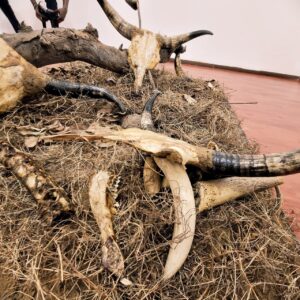
Ima Tchitanga_2025_Installation work at 24/24 Mais alguma coisa_Variable dimensions
Claiming space: Female voices reinventing contemporary art in Angola
In Angola, contemporary female art is not content with merely representing reality: it intervenes in it through the body, space and lived experience. In recent years, a group of young artists has begun to challenge the terms of the visible and the sayable, deploying practices that go beyond conventional languages. Their works articulate politics of the body and critical subjectivities that confront patriarchal structures, historical silences, and naturalised forms of violence. From situated experiences, they transform the artistic sphere into a field of resistance and permanent renewal.
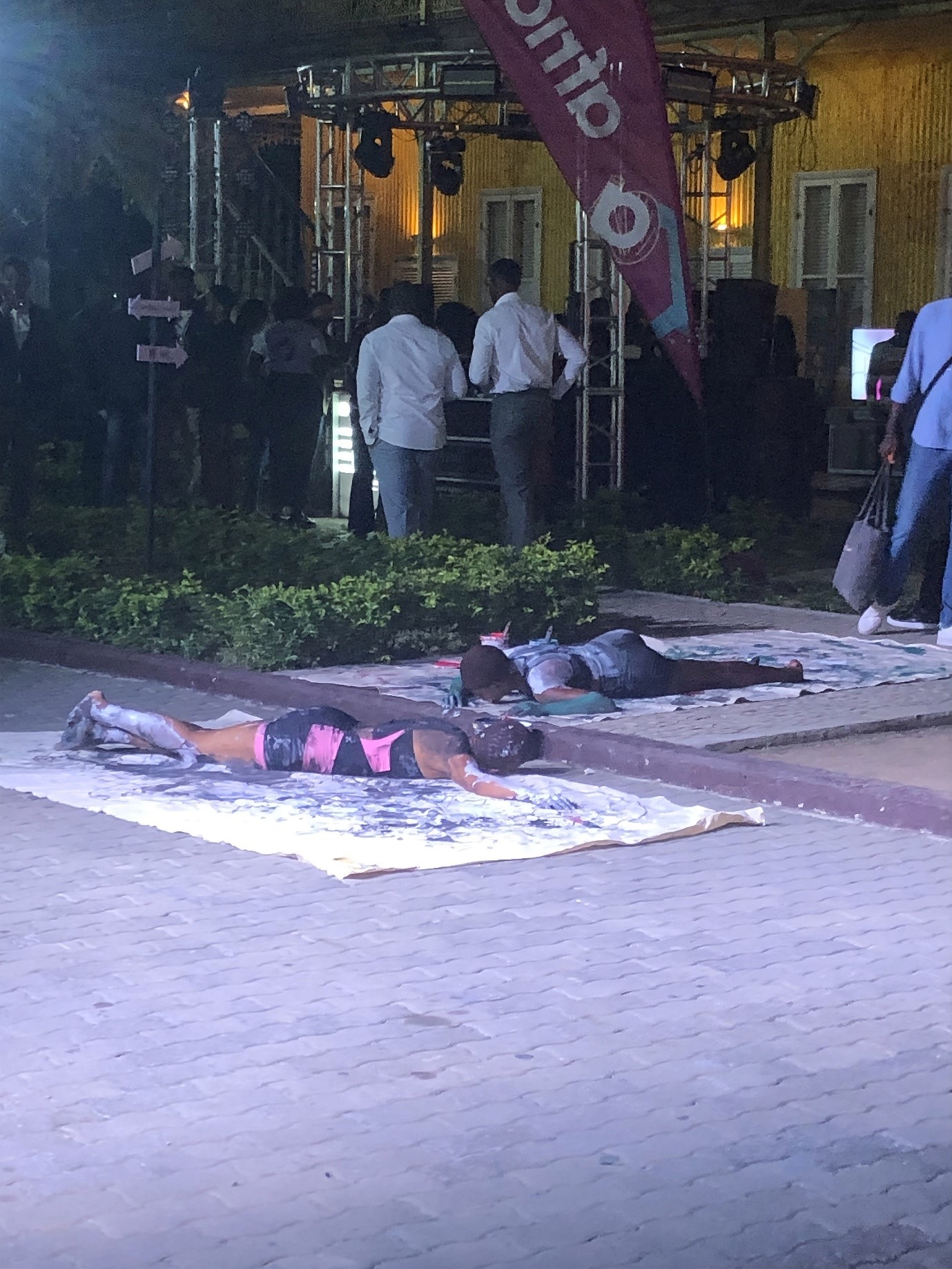
Within this horizon of practices, the performances of Marisa Kingica and Surene Fernandes burst onto the Luanda exhibition circuit in 2025 as gestures of symbolic occupation. At the Africell Luanda Art Fair 2025, held at the Ferro Museum, both artists displaced the logic of the finished object to place the process and the body at the centre of the aesthetic experience.
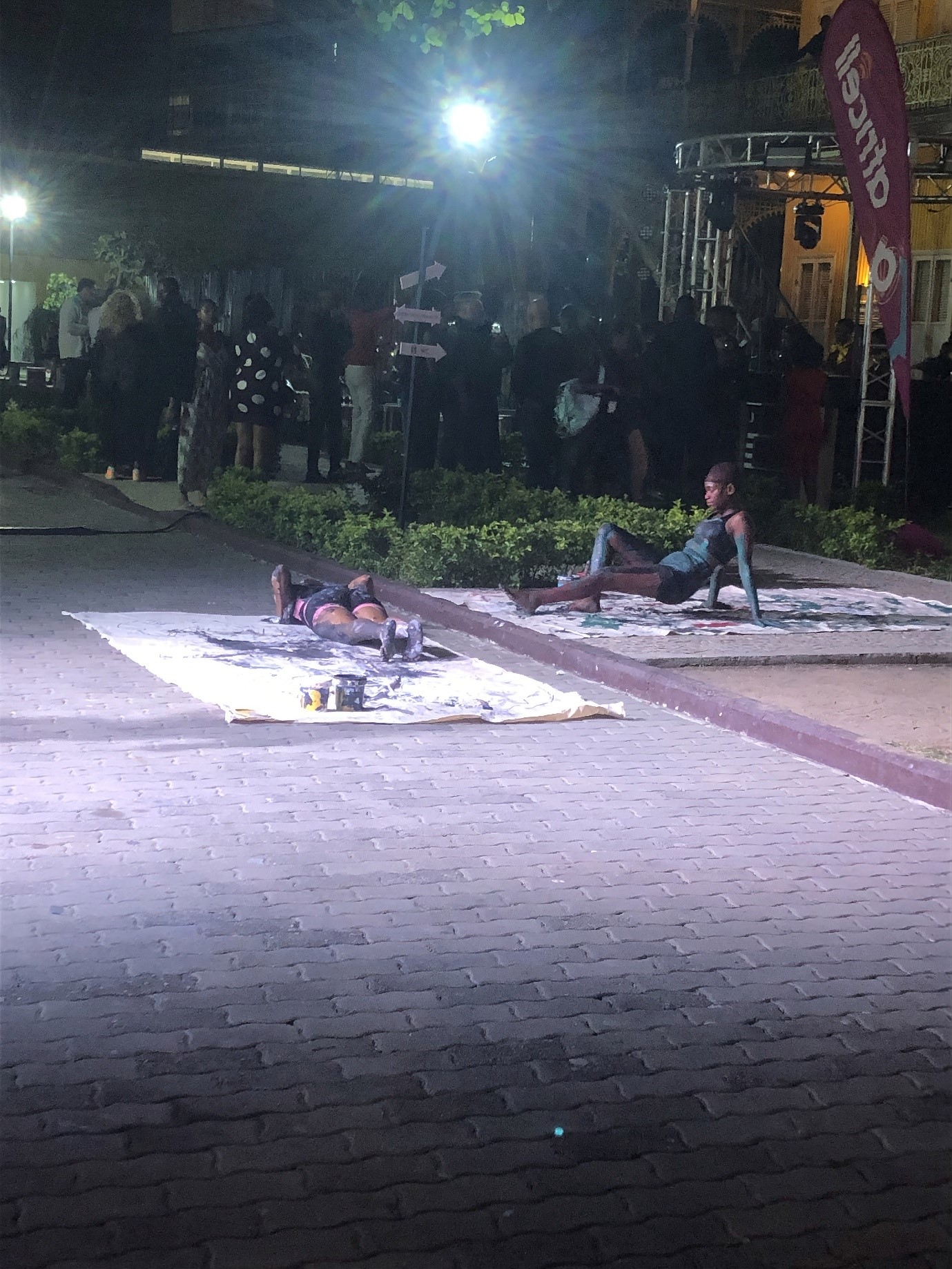
Marisa Kingica & Surene Fernandes_Performance_ 2025_Africell Luanda Art Fair
Surene Fernandes & Marisa Kingica_Performance_2025_Africell Luanda Art Fair
For several hours, in front of an audience passing through the museum’s central courtyard, they performed body painting actions on canvases laid out on the floor. Their movements did not simply produce an image: they activated the body as a surface for inscription and as a device for speech. There was no painting to contemplate, but rather a presence that challenged the viewer. The gesture transcended the conventions of traditional painting and transformed the exhibition space into a territory for bodily experimentation.
What was decisive was not only the movements, but the affirmation of freedom that they embodied. The female body ceased to be an object of representation and became an active subject of enunciation. The naturalness of the gesture, far from any spectacularisation, operated as an act of empowerment and re-inscription within a context permeated by patriarchal norms.
In another of their actions, both creators appeared characterised as “dolls”, playing with stereotypes associated with the cultural industry of femininity. However, far from reproducing them, they challenged them with irony and excess. In an environment where romantic and maternal gender narratives persist, their bodies produced discomfort and questioning, shifting the boundaries of what is socially acceptable.
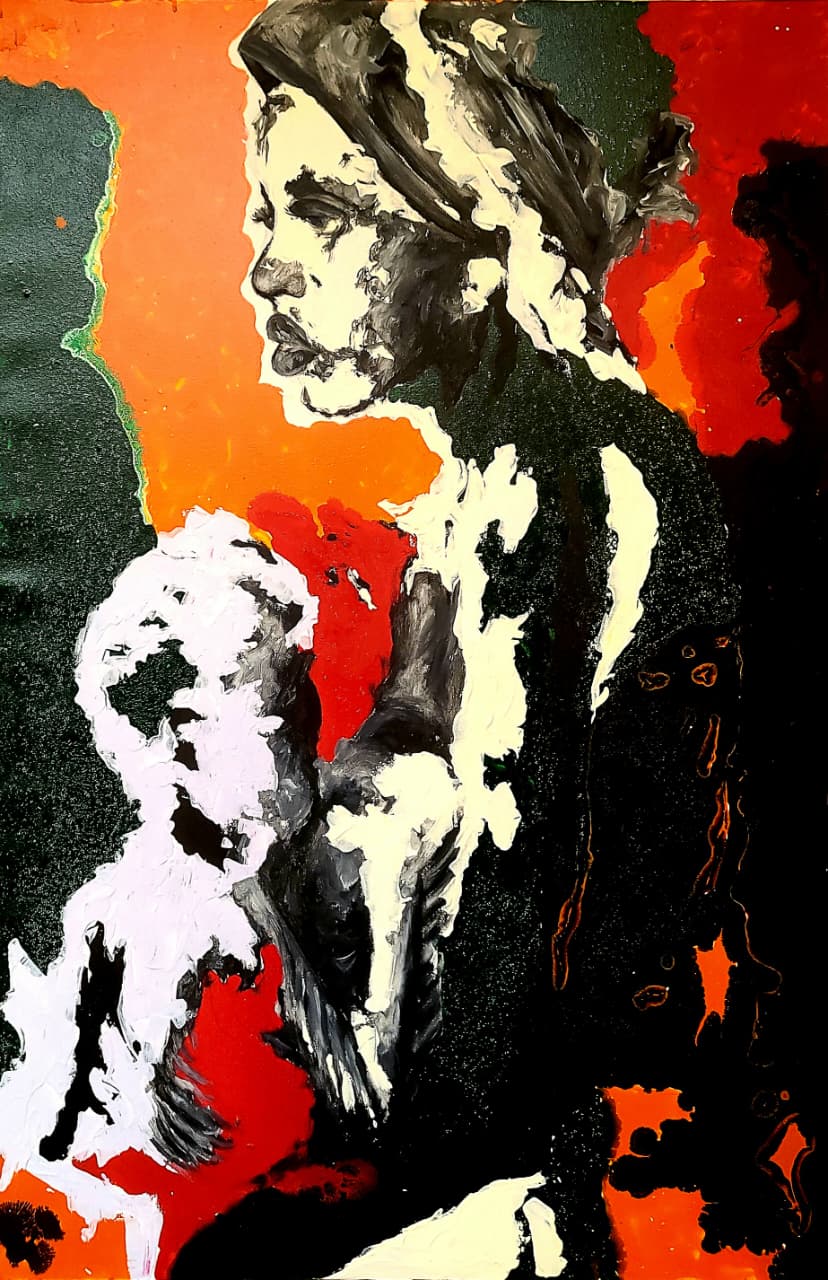
A few weeks later, Marisa Kingica presented Baltasar at the exhibition Artes no femenino (2025), organised by the Cultural Centro Camões to mark African Women’s Day and the anniversary of the Pan-African Women’s Organisation. In this large-scale pictorial work, the artist shifted the performative energy towards an equally powerful visual register.
The large-scale painting denounced harassment against women through a powerful palette. The figures, cut out from the background with their characteristic formal treatment, seemed suspended in a space of tension and fragility. These resources gave expressiveness to the message to speak about the marginal position that women hold socially. The work questioned the power structures that sustain inequalities and the vulnerability of women’s bodies. But at the same time, it recovered the strength and power of those voices that sustain life, children, the informal economy and everyday life in Angola.
Ima Tchitanga_Erosão da Esperança_2025_acrylic on canvas_62 cm x 100 cm
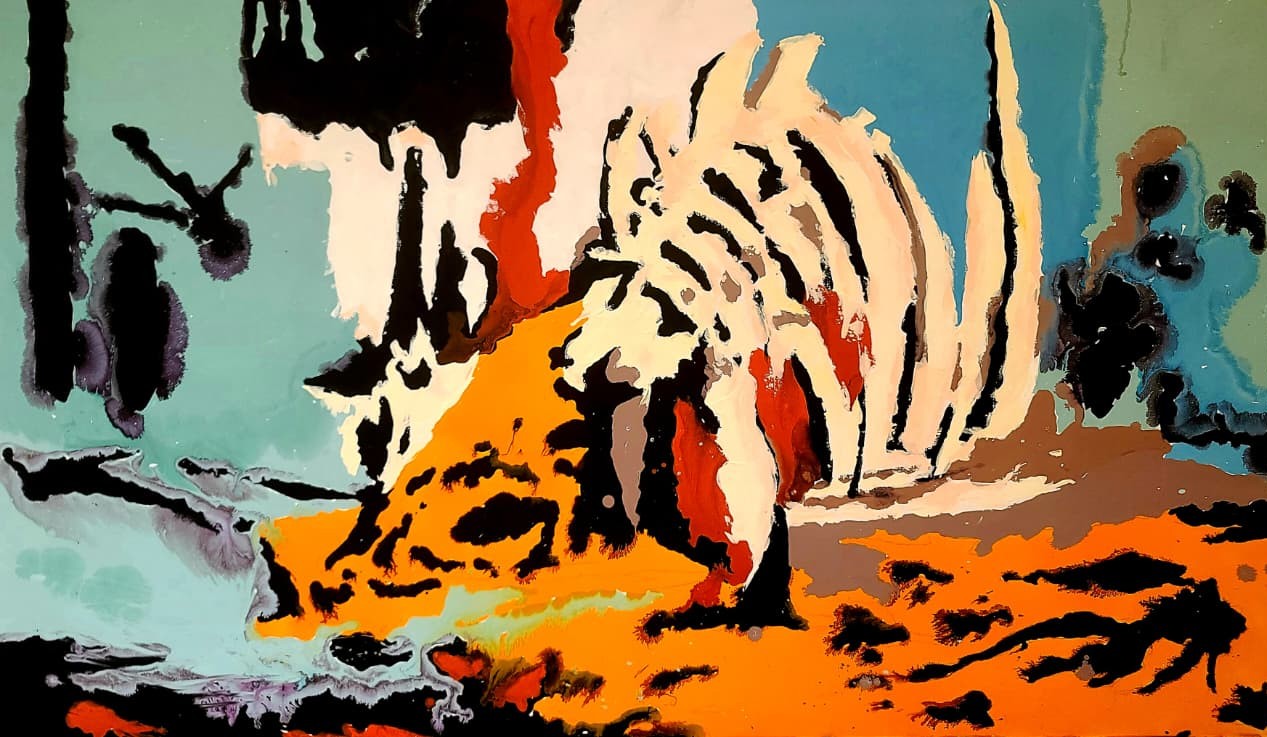
In a different but equally intense formal vein, Ima Tchitanga expanded the notion of the body to include landscape and ecological memory. In the exhibition 24/24 Mais alguma coisa. Corredores de Transumância Humana (2025) presented at the Fundação Arte e Cultura, the artist articulated a proposal in which painting and installation dialogued to construct a narrative about loss and forgetfulness.
An installation composed of collected animal bones occupied the centre of the room, imposing a material presence that was difficult to ignore. These were not merely organic remains, but vestiges of a territory eroded by drought and desertification. On the walls, a sequence of paintings evoked aerial views of devastated landscapes: dry leaves, arid surfaces, fragments of wounded earth. The expressionist brushstrokes intensified the feeling of desolation, as if the colour itself recorded the heartbeat of an ecosystem in crisis.
Ima Tchitanga_Êxodo Silencioso_2025_Acrilic on canvas_130 cm x 82 cm
In the exhibition, the landscape became an extended body, a vulnerable organism whose fragility challenged the human experience. Ima Tchitanga thus resisted institutional amnesia in the face of environmental issues, pointing out that forgetting the territory also means forgetting the lives that inhabit it. Her practice reveals an ecological dimension where memory and collective responsibility are intertwined.
In the contemporary context of Luanda, these artists incorporate critical subjectivities that transform the artistic space. They rewrite narratives about gender, nature, memory, and power. Their practices not only make social and ecological wounds visible, but also affirm the capacity for agency and reinvention. In this gesture, art becomes an exercise in embodied resistance and a commitment to imagining other ways of inhabiting the common.