Mohamed El baz
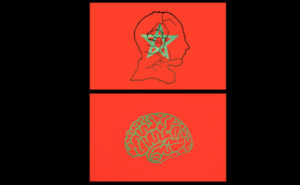
Flag Spécial, 2014.
About:
Born in El Ksiba, Morocco in 1967 , Mohamed El baz graduated from the l’Ecole Régionale d’Art (Regional School of Fine Art) Dunkirk in 1989. In 1992, he obtained a DNSEP (Diplôme National Supérieur d’Expression Plastique, .diploma in visual arts) from the ENSA ( École Nationale Supérieure d’Arts de Paris Cergy) in Cergy. He also took classes at IHEAP in Paris (Institut des Hautes Études en Arts Plastiques (1988-1994), founded in 1985 by Pontus Hulten with Daniel Buren and Sarkis. Mohamed El baz lives and works in Casablanca , Morocco and Lille, France .
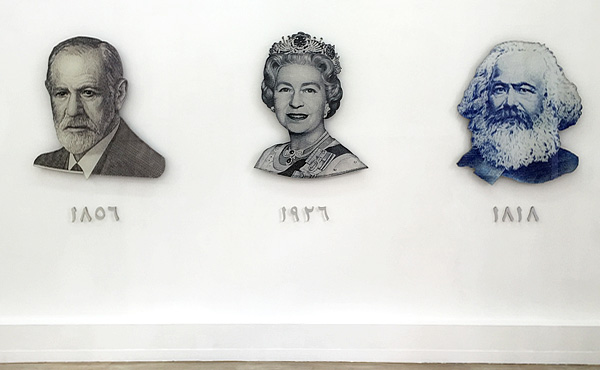
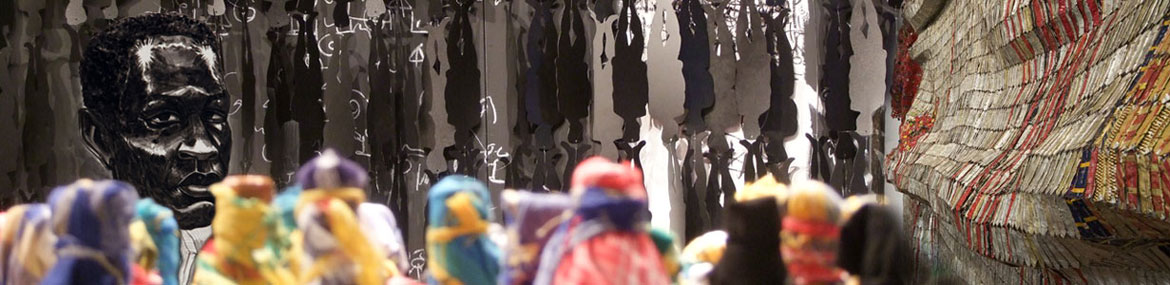
Bricoler l’incurable, 2017.
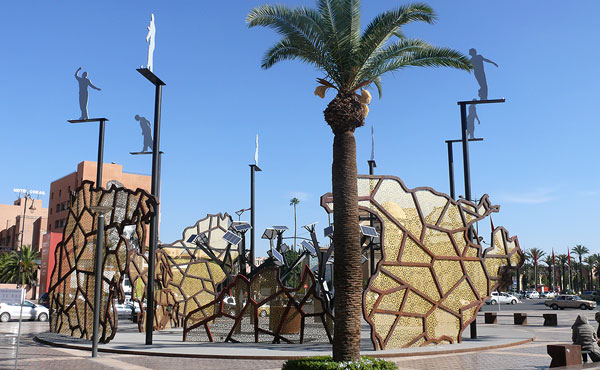
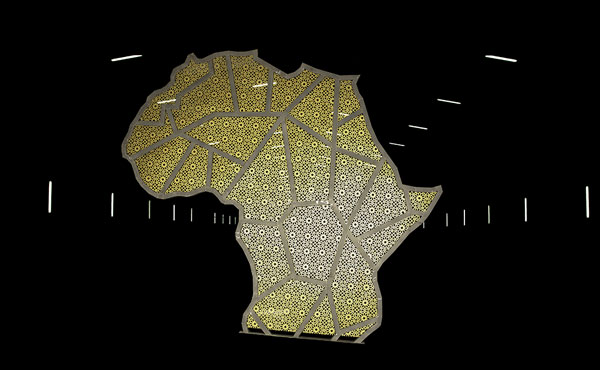
Since 1993, Mohamed El baz has been creating a work entitled “Bricoler l’incurable”( Mending the incurable). His leitmotiv provides him with an ongoing, never ending and always controversial installations; as components or “details” find a place and adapt to each new concept .
His work has three orientations through which Mohamed El baz crosses boundaries and categories : daily , autobiographical and playful ; the work itself becomes mobile and turns into a different story. Mohamed El baz questions the notions of borders and territories and all that works to erect barriers between people .
*
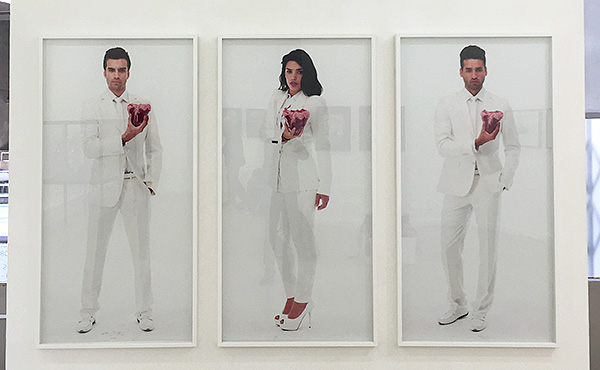
Bricoler l’incurable, 2017.
The formula Bricoler l’incurable was established (and presented) for the first time in 1993 in a text writ large on the wall by Mohamed El baz in the show Le Milieu du monde (The Centre of the World) at the CRAC (Centre Régional d’Art Contemporain) in Sète.
It seemed “right” to him, in line with his artistic project and what prompts and probes it: “If I am engaged [in art], what is the reason? What are the aims? It is useful only if it mends something in my intimate relationship with the world. Otherwise, why choose to be an artist?”
Having just left school, the artist thus placed the very question of the work of art at the heart of the same and, through its mediation, took to heart and tackled the questions that already haunted him: belonging, difference, social status, the explosion of the concept of the diaspora, the relationship with the other and with the world, the function of art, the role of the artist, and so on.