africanah.org

Arena for Contemporary African, African-American and Caribbean Art

Archive: articles

Caribbean Travelogue: The Dominican republic

BelkisRamirezACupofCoffee2000

In November last year Sasha Dees started travelling in the Caribbean region, researching the sustainability of contemporary art practices and the influence of international (exchange) projects, funding, markets and politics. During her research she will be keeping a travelogue for Africanah.org.
In this 6th article the focus is on The Dominican Republic. Her conclusion:
Quality can no longer be determined and judged exclusively by the native European canon. Art and artists in reality have always moved between canons, fluidity is key, curators and critics can only benefit when they fully and without hesitation accept this principle. No canon is set in stone, and no canon has ever been owned exclusively by anybody, so let’s get to work and keep it moving.

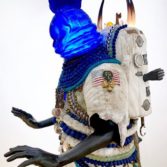
Belkis Ramirez, A Cup of Coffee, 2000

Read more »

Notting Hill Carnival

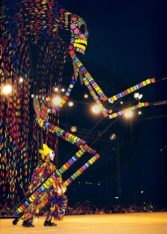
NottingHillPeterMinshall costume design

After the 1958 race riots, there was an effort to heal the rift between the black and white communities. From that intention, those immigrants from Trinidad, St Lucia, Jamaica and other countries established the Carnival, bringing through the influences and flair from back home. The first Carnival was held on 30th January 1959 in St Pancras Town Hall under the organisation of political activist Claudia Jones. Jones founded The West Indian Gazette, the UK’s first black newspaper, and the carnival was televised by the BBC in an aid to build bridges in Britain.

Christabel Johanson: How Notting Hill Carnival was meant to heal the rift between the black and white communities
Carnival costume designed by Peter Minshall Read more »

THE HERITAGE OF FREDERICK DOUGLASS

Recto

Living in the era of the selfie where many millions of people seem to be busy with their self-image, without political or social necessity, but just for fun or vanity or insecurity, in which that can happen effortlessly through the lightning-fast technical developments and in which those images in no time at all spread around the world, it may be difficult to fully appreciate the importance of these staged, historical photographs, photographs that, on top of that, cannot be massively distributed because they were made with cameras that immediately printed them on paper.

In this article Rob Perrée shows how important these historical photographs of black Americans were and still are.
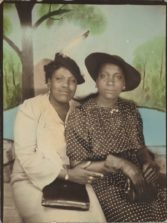
Unknown American maker, Studio-Portrait, 1940s-50s, Courtesy of The Metropolitan Museum of Art.

Read more »
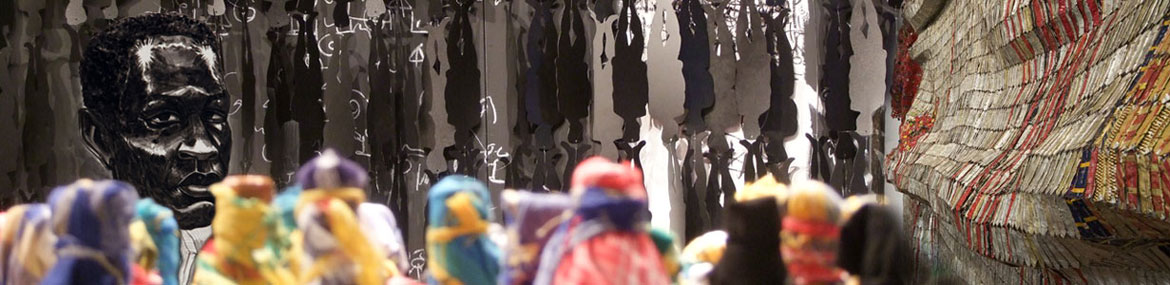
Abdulrazaq Awofeso’s wooden friends

AbdulPortret

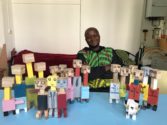
“I use everything I see and experience in my daily life as a source of inspiration. Things I encounter, hear or read. I am interested in people’s reactions to their environment; when we talk about migrants for example, I ask myself: how do they cope with their new surroundings and with being illegal? What kind of human reactions and emotions pass through them?”

Rosalie van Deursen in conversation with Abdulrazaq Awofeso

Read more »

Rehema Chachage

RehemaPortrait

It is hard to talk about how my work is perceived. I think it’s received well but there have to be enough critics from the continent reviewing it for me to learn how it is perceived. When I started, people doing the kind of work I do in my country were negligible though some existed in other countries. All I can say as my mother often says, ‘the future is abundant’.

Raquel Villar-Pérez in conversation with Dar es Salaam based Rehema Chachage (1987)

Read more »