
africanah.org

Arena for Contemporary African, African-American and Caribbean Art

Archive: articles

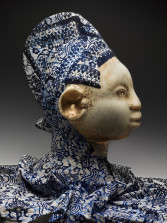
The Dancing Kabra Mask

#1 kabra mask

Anthropologist James Clifford argues that art museums must learn from anthropologists; for example, to see objects as a process and not just as a product. The use of the object adds value. This is exactly what happens when the Kabra mask dances and gives the ancestors an opportunity to manifest themselves. Masks make sounds, says Clifford, they move, but they lose that ability in museum display cases. Once they end up in a museum, they stop their function in society.
Annemarie de Wildt of the Amsterdam Museum tells the story of the creation and the acquisition of the dancing Kabra Mask.

Kabra dance-mask, Boris van Berkum, 2013. Lacquered polyurethane, textile 66 x 40 x 40 cm. Collection Amsterdam Museum. photo Erik Hesmerg

Read more »

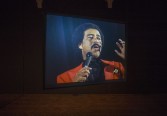
Glenn Ligon

GlennLigonRichardPryor

“Call and Response is a visual remembrance of the way in which the stories and histories of blacks in America have repeatedly been confused, smudged, silenced and fractured by those in power, those who hold the gaze.”

Alexandra Giniger reviews the latest exhibition of Glenn Ligon.

Read more »

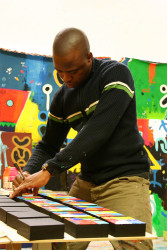
Marcel Pinas

marcel-pinas-atelier

“My work is like the voice of the community where I come from. I use a lot of symbols and objects from that culture. But at first I could not reach my own people because they don’t go to the gallery, they don’t go to the museum. So I went into the community to work with the community. So now when I make something they get involved, they make some money from it. “

Chris Morvan interviews the Surinamese artist and director of the Nola Hatterman Art Academy Marcel Pinas.

Read more »

THE SUCCESS OF CHRIS OFILI

OFILIthehealer

Fifteen years ago Chris Ofili made “sick stuff” according to the mayor of New York. He is back in town now with an exhibition – ‘Night and Day’ – in the New Museum.
The reactions on this show are completely different. No accusations of blasphemy. No angry visitors. Ofili’s return is the return of a hero of British contemporary art. The critics hardly have enough words to praise the artist. “Breathtaking”; “(…) an endless sensuous dive into the most carnivalesque pleasures of painting”; “His paintings mesmerize (…)”; “Great art” etc. etc.
What happened? Did the city change? Did the audience change? Did the time change? Did the artist change?
Rob Perrée tries to give an answer.

The Healer, 2008.

Read more »

BRAZIL: “IT’S COMPLICATED”

AyrsonWebImage

“Contemporary Art even today is still an activity for the elite in Brazil. The elite are a small group of people that descents from and still owns former plantation properties and/or the fruits of that today. Brazil is a class system, 80% poor people, the “one per centers” and a very small middle class. That with a very poor education system makes that only a few can afford to have good private education in and outside of Brazil. The descendents of the enslaved Africans are still the poor people of today in Brazil. This is even more the case if you talk about the 7% black (preto) people”.

Sasha Dees is looking for black artists in Rio de Janeiro.

Read more »